
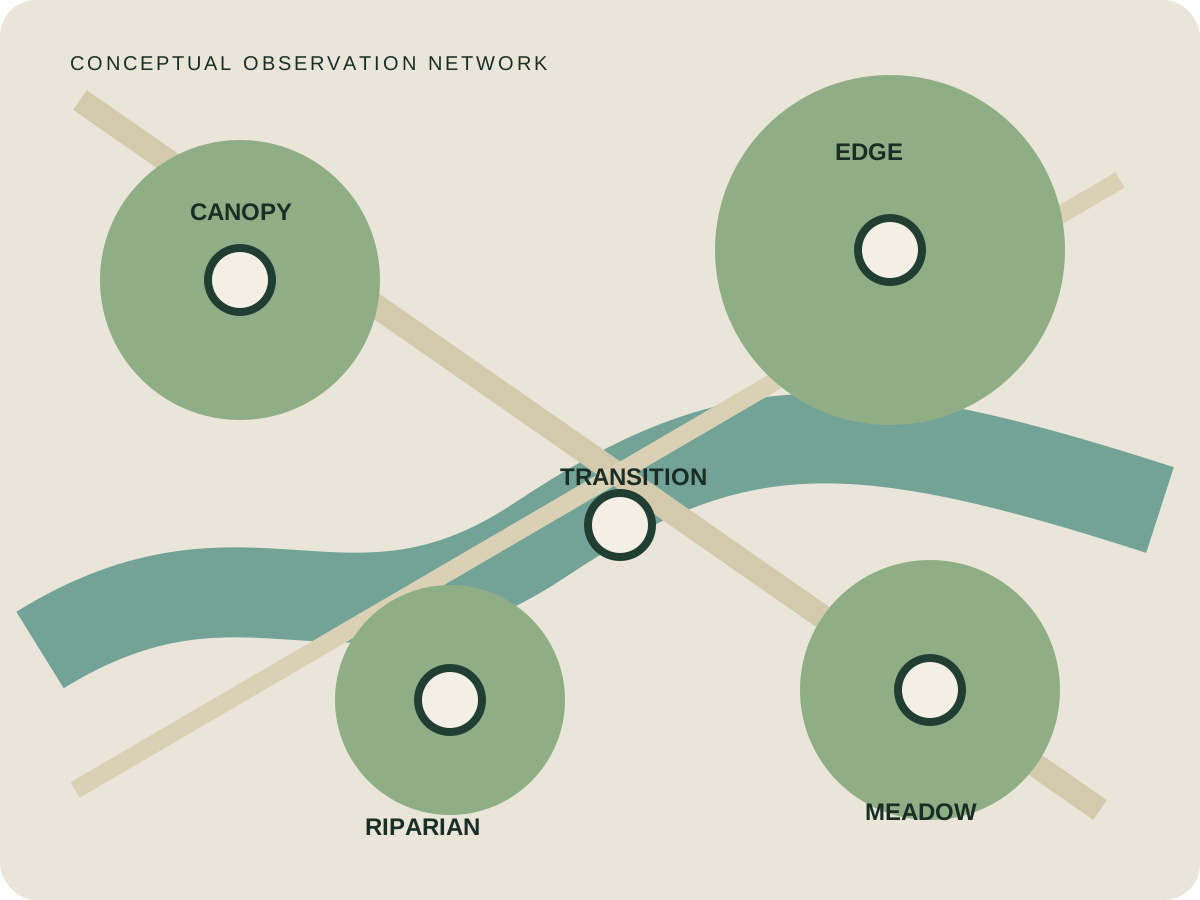
Canopy, wetland, riparian, meadow, built edge, and transition.
URBAN ECOLOGY OBSERVATORY
A distributed observatory, not a claimed field station.
The observatory is a research design for comparing ecological conditions across publicly accessible, authorized, partner-approved, and externally sourced observation settings.

CONCEPTUAL NETWORK
Observe transitions, not isolated points.
The most informative unit may be the boundary between habitat types, not the habitat label itself.
The observatory organizes sites by canopy, wetland, riparian, meadow, built edge, and transition conditions. It then compares the same protocol across multiple times and disturbance regimes.
Spatial unitHabitat class + transition type
Temporal unitRepeated observation window
Comparison unitMatched context across sites
Primary outputTraceable observation series
Dawn, mid-day, dusk, and targeted event periods.
Weather, sound, light, activity, and habitat structure.
Scoping, pilot, and repeatable monitoring.
ILLUSTRATIVE SCENARIO LAB
Test whether a site is ready for repeated observation.
This interface demonstrates prioritization logic. It does not report a real ecological score or a measured property condition.
Balanced observation zone58
The scenario may support a pilot, but additional context would improve interpretability.
MODEL COMPONENTS
Illustrative readiness profile
OBSERVATORY GOVERNANCE
Every site relationship is recorded as metadata.
Site identity, access basis, authorization status, activity limits, temporal restrictions, media rules, and attribution requirements are part of the observation record.
This prevents public availability from being confused with ownership, partnership, research permission, or institutional affiliation.
Regional landscape ↗